

A complete beginner’s roadmap: learn the classes, how skill & support gems work, and which items to chase first.
Path of Exile 2 (PoE2) is a free-to-play action RPG developed by Grinding Gear Games. It’s the sequel to the original Path of Exile, known for its deep character customization and challenging gameplay.
The campaign has six story acts, and once you complete it, you’ll enter the endgame — an infinite system of maps, bosses, and challenges designed to keep you progressing forever.
 Classes and Ascendancies
When you begin, you choose a base class. Each one has preferred stats, weapons, and playstyles, but later you’ll specialize further through Ascendancies (subclasses unlocked during the campaign).
Warrior
Strength-focused, favors heavy melee weapons (maces, axes, swords).
Tough, durable, excellent at direct combat.
Monk
Hybrid Dexterity + Intelligence, fights with quarterstaves.
Agile fighter, blends martial arts with spellcasting.
Mercenary
Dexterity + Strength, specializes in crossbows.
Very versatile: can deal physical or elemental damage, great choice for beginners.
Sorceress
Intelligence-based, staff user.
Classic caster: fire, lightning, and cold magic.
Witch
Intelligence-focused, uses wands.
Specializes in necromancy, curses, chaos damage, and minions.
Ranger
Dexterity-focused, bow specialist.
Fast and precise, great at ranged damage and critical hits.
Huntress
Hybrid fighter with spears.
Agile melee/ranged hybrid with parries, combos, and counterattacks.
 What are Ascendancies?
Ascendancies are subclasses you unlock as you progress through the story. By completing special trials (known as Trials of Ascendancy), you gain the ability to pick one of three unique subclasses per base class.
Ascendancies give your character powerful passive abilities, new mechanics, and a more defined identity.
Example: The Witch can become a Lich, the Warrior can ascend into the Smith of Kitava, and the Huntress can specialize into Amazon or Ritualist.
One of the most important things to remember in Path of Exile 2 is that your character is not strictly limited by its starting class. While each class begins with a natural affinity — for example, Warriors lean toward Strength, Rangers toward Dexterity, and Witches toward Intelligence — the game’s build system allows for incredible flexibility. You could create a Marauder who hurls fireballs instead of swinging heavy weapons, or a Duelist who focuses on ranged bow skills rather than melee combat.
This freedom becomes even more interesting with classes like the Druid, who can literally change forms, offering shapeshifting mechanics and hybrid playstyles. But nothing stops you from experimenting: maybe you want the survivability of a Marauder, but still want to specialize in spells that normally align with the Witch. Because the passive skill tree is shared among all classes, starting points only determine your early path. From there, you can branch out in any direction.
That said, classes do provide a solid foundation for building. If you’re new, choosing a class whose natural strengths align with the playstyle you want — like the Witch for summoning, or the Ranger for bow skills — will make progression smoother. However, if you’re feeling adventurous, you absolutely can “break the mold” and push into secondary playstyles. Just keep in mind that the more unconventional your build, the more you’ll need to understand the game’s mechanics to make it work effectively.
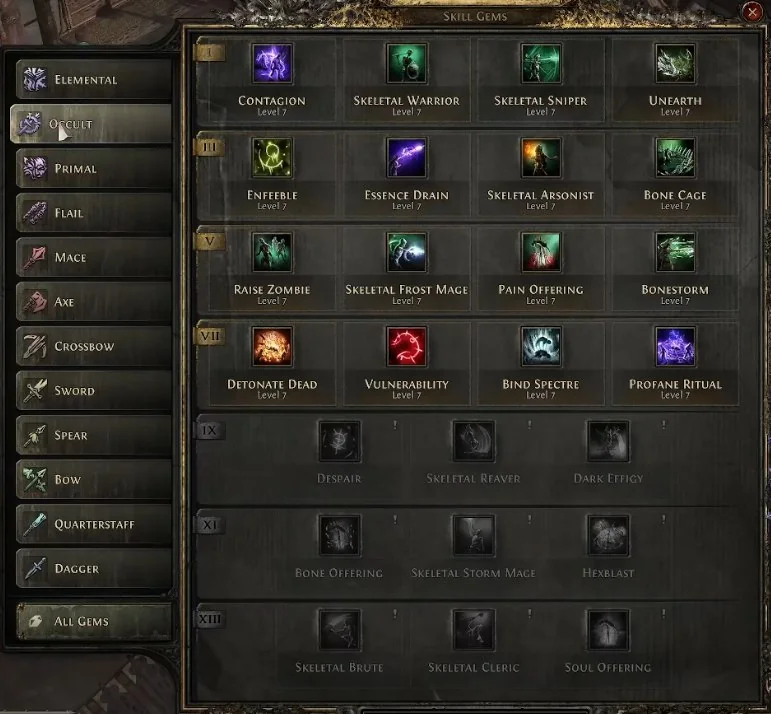
Path of Exile 2 doesn’t have a traditional “skill tree” for combat abilities. Instead, all your active powers come from Skill Gems.
Skill Gems → Active abilities such as Fireball, Raise Zombie, or Cleave.
Support Gems → Modify existing skills, adding new effects like more projectiles, faster casting, or converting damage types.
🔗 The heart of PoE2 is combining Skill Gems + Support Gems. The right setup transforms simple abilities into devastating attacks.
Each class has preferred weapons, but you are never locked into them.
Warrior → Maces
Monk → Staves
Mercenary → Crossbows
Sorceress → Staves
Witch → Wands
Ranger → Bows
Huntress → Spears
👉 Nothing prevents a Witch from wielding a spear or a Warrior from summoning undead. Builds are defined by your gems and passives, not just weapons.
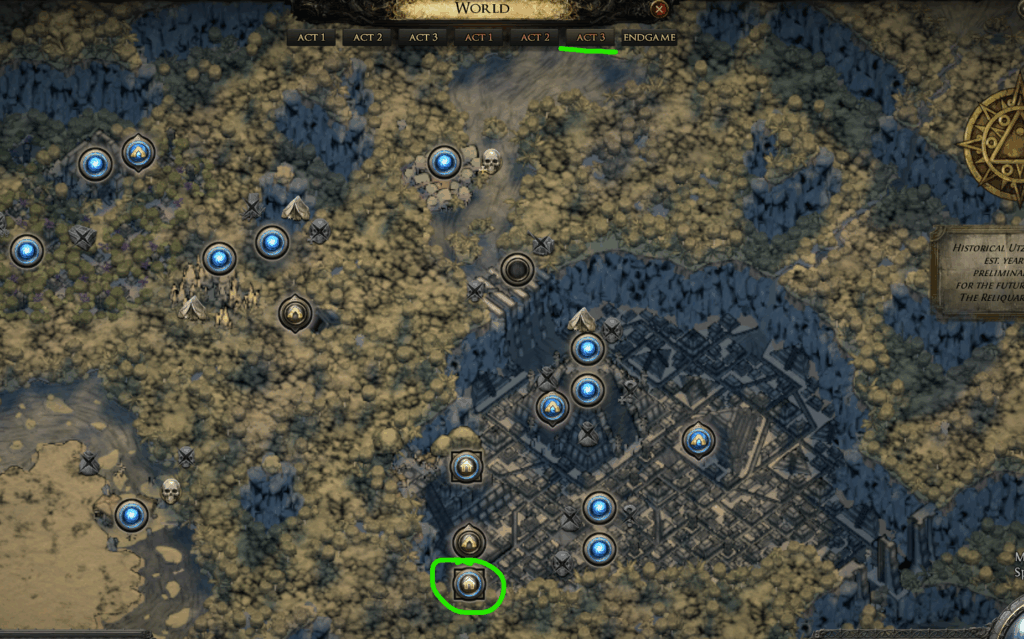
The campaign is designed to gradually introduce you to the game’s systems.
Acts 1–3 → Learn the basics: loot, gems, sockets, and first Ascendancy trials.
Acts 4–6 → Unlock stronger supports, advanced weapons, and more passive points.
End of campaign → Final Ascendancy choices, better gear, and preparation for the endgame mapping system.
💡 Tip: Don’t stress about creating the “perfect build” during your first playthrough. The story is meant for experimentation.
Always pick up different gems — even if you don’t use them right away.
Upgrade and use flasks for survival; they are lifesavers.
Don’t fear death — learning enemy patterns is part of the game.
For your first run, focus on fun over efficiency. Explore and enjoy!
The Druid class is expected to release around August 29, adding even more build possibilities. Stay tuned for its arrival!

iBoost is an independent platform and is not affiliated, associated, authorized, endorsed by, or in any way officially connected with any game developers, publishers, or distributors, including but not limited to: Riot Games, Valve Corporation, Blizzard Entertainment, Ubisoft, Electronic Arts, or any other entities that hold rights to the games mentioned on this website as part of the services offered.
All trademarks, game titles, logos, characters, and intellectual properties featured on this site are the sole property of their respective owners. The use of such names and assets is purely descriptive, intended only to identify the services provided, without any intention of infringing upon copyright or trademark laws. These names and brands are not used in a commercial capacity, nor do they appear on the site in a way that implies endorsement.
By using the iBoost platform, users acknowledge that purchasing services such as game boosting may violate the Terms of Service or Code of Conduct of certain games. iBoost does not take responsibility for any penalties, suspensions, or bans issued by game publishers as a result of using our services.
We strongly encourage all users to review each game’s official terms before purchasing any services.
 PayPal
 PIX
PIX
 Credit Card
 Debit Card
 Stripe
 Apple Pay
 Google Pay
 Wise
PayPal
PIX
Credit Card
Debit Card
Stripe
Apple Pay
Google Pay
Wise
Wise
PayPal
PIX
Credit Card
Debit Card
Stripe
Apple Pay
Google Pay
Wise